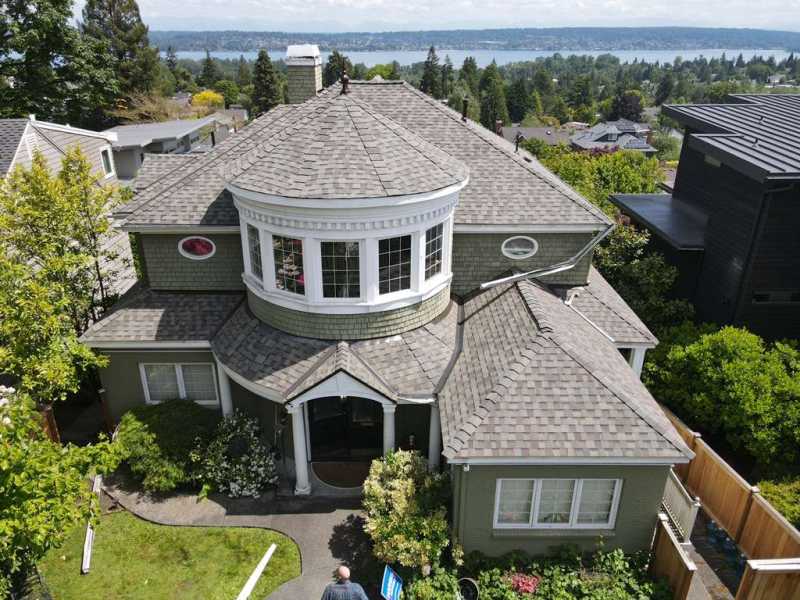
If you own a home in Seattle, you already know the roof takes a beating. Months of rain, limited sun, moss growth, and older construction all add complexity to what might seem like a straightforward project.
This guide expands on the information found on our Roof Replacement in Seattle page and breaks the replacement process into clear, practical steps.
It’s meant to help you understand what typically happens during a roof replacement here—before crews show up, while work is underway, and after the last shingle is installed.
As a local roofer, Elite Gold Contractors approaches roof replacement as a system rather than a single installation day. Whether you’re gathering information or preparing for an upcoming project, this walkthrough is designed to give you clear expectations before work begins.
Let’s start with what a roof replacement looks like in Seattle.
Key Takeaways
- Seattle roof replacement requires a moisture-focused, system-level approach.
- Thorough inspections and full tear-offs help uncover hidden rot and ventilation issues.
- Material choice matters—architectural asphalt, metal, and composites perform differently in wet climates.
- Permits, code compliance, and HOA or historic rules must be addressed early.
- Proper underlayment, flashing, and ventilation are critical for long-term performance.
- Weather-aware scheduling and precise installation protect warranties.
- Ongoing maintenance—especially gutter cleaning and moss control—extends roof life.
What Roof Replacement Looks Like in Seattle
Roof replacement in Seattle follows the same general steps as anywhere else, but the details are shaped by constant moisture, moss growth, and a high number of older homes. Materials, installation methods, and scheduling are all adjusted to handle long rainy seasons, limited winter sun, and heavy tree cover.
The process typically starts with a detailed inspection that looks beyond shingles to include roof decking, attic ventilation, flashing, and moisture damage. On older homes—like 1940s Craftsman homes in Ballard—it’s common to find multiple roofing layers, soft plywood near eaves, and moss-damaged edges.
Most Seattle roof replacements include:
- Full tear-off of existing roofing layers, as overlays rarely perform well in wet conditions
- Replacement of rotted sheathing, especially around chimneys, valleys, and eaves
- Enhanced underlayment, including ice and water shield in leak-prone areas
- Upgraded flashing at skylights, dormers, sidewalls, and transitions
- Ventilation improvements to reduce condensation and moisture buildup
Material choices often reflect both performance needs and neighborhood style. In areas like Capitol Hill, architectural shingles that mimic wood shake are common. In West Seattle and newer developments, standing seam metal is popular for its longevity and resistance to moss.
Permits are usually required. Most full roof replacements fall under Seattle’s streamlined permitting process, while structural changes, new skylights, or flat roof conversions require additional review. HOA communities may also restrict roofing colors, profiles, or materials, making pre-approval essential.
Weather drives scheduling. Contractors plan tear-offs around forecast windows to dry in quickly and avoid leaving decking exposed overnight. Larger or complex roofs are phased to minimize risk, with tarps used only when necessary.
Local experience matters. Seattle contractors understand where moss grows fastest, how debris collects in valleys, and which materials hold up best near Puget Sound. That knowledge guides choices like synthetic underlayment, corrosion-resistant fasteners, smarter drainage details, and algae-resistant or metal roofing where appropriate.
Because inspection findings often determine the scope of repairs, material choices, and labor required, they have a direct impact on roof replacement costs in Seattle.
Step 1: Initial Roof Evaluation and System Assessment
This phase establishes the baseline for a Seattle roof replacement and helps prevent surprises once the old roof is removed.
The evaluation starts with an exterior site walk. From the ground, the contractor reviews the roof layout, slope, eaves, and nearby trees. In Seattle, heavy shade from firs and cedars promotes moss, debris buildup, and constant dampness, which directly affects material choices and ventilation planning.
On the roof, existing materials and flashings are inspected for cracking, curling, missing shingles, granule loss, and soft areas. Valleys, chimneys, skylights, and sidewalls receive special attention, as these are common leak points during extended rainfall. Rusted flashing, failed sealant, and prior patch work are noted.
Gutters and drainage are checked for sagging, clogs, and fascia staining. Inadequate gutters often force water behind the roof edge in Seattle’s rain. Downspout placement is also evaluated to reduce moisture stress at the eaves.
Inside, the attic and interior ceilings are inspected for staining, active leaks, wet insulation, or signs of poor ventilation. Rusted nail tips, mold on roof decking, and musty odors commonly point to condensation issues in older homes.
Roof structure is probed for rot, especially on older Craftsman homes with original board sheathing. Rafter tails at eaves are closely examined, as wind-driven rain and gutter overflow frequently cause hidden decay.
All findings are documented with photos and notes to support accurate planning, permits, and bids. Any urgent safety or leak-related issues—such as spongy decking, loose gutters, or active interior leaks—are prioritized, while non-critical issues are scheduled for the full replacement.
Step 2: Material Selection Based on Seattle’s Climate
In Seattle, roofing materials must handle constant moisture, mild summers, and occasional wind without becoming a maintenance problem or sacrificing energy performance. Choosing the best roofing materials for Seattle’s climate is critical for long-term durability, moss resistance, and water shedding—especially on shaded or tree-covered homes where roofs stay damp for much of the year.
Long wet seasons favor materials that shed water quickly, dry efficiently, and resist moss and algae. Standard three-tab asphalt shingles typically perform poorly in these conditions, as they trap moisture and debris. Architectural asphalt shingles are more suitable—they’re thicker, more durable, and often include algae-resistant granules that reduce staining on shaded roofs.
Homes with heavy tree cover may still need periodic moss control. In those cases, metal roofing performs exceptionally well. It doesn’t absorb moisture, sheds needles and leaves easily, and significantly reduces moss buildup when properly pitched. Standing seam metal is a common upgrade on Craftsman and mid-century homes where long-term durability is a priority.
Composite roofing products, such as synthetic shake or slate, offer a middle ground. Made from polymer blends, they provide better moisture resistance and dimensional stability than wood while being lighter than real slate or tile—an advantage for older Seattle framing.
Underlayment and fastening systems are critical in this climate. Wind exposure, thermal cycling, and constant dampness place more stress on the full roof assembly than on the surface material alone. Energy performance also matters. While extreme heat is rare, reflective shingles or light-colored metal can reduce heat gain on sunnier slopes.
The best results come from pairing moisture-resistant roofing materials with proper attic insulation and ventilation, creating a roof system designed for Seattle’s year-round conditions.
Step 3: Permits, Codes, and Local Compliance
A roof replacement in Seattle isn’t just about materials and workmanship—it must comply with city codes, safety requirements, and neighborhood regulations.
Most full roof replacements require a permit from the Seattle Department of Construction and Inspections (SDCI). Any majority tear-off, material change, or structural modification typically triggers permitting, whether the home is in Ballard, West Seattle, or Maple Leaf. Minor, like-for-like overlays may be exempt, but those are uncommon in Seattle’s climate.
Permits tie the project to the Seattle Building Code, which emphasizes moisture control, wind resistance, and fire safety. Roof slope, underlayment type, ventilation, and eave protection are all regulated. Your contractor usually pulls the permit online through SDCI, outlining the scope of work and paying the required fee. Homeowners should always request a copy of the issued permit for records and resale purposes.
Homes in historic or landmark districts face additional oversight. In areas like Capitol Hill or Pioneer Square, visible roof materials may require approval to ensure they match the home’s original character. Modern materials that closely resemble historic ones are often allowed, while visually incompatible options may be restricted. Verifying this early prevents delays and redesigns.
Contractor credentials matter. Washington requires roofing contractors to be registered with L&I.
A contractor should also be authorized to pull permits in Seattle. If you’re asked to pull the permit yourself, that’s a warning sign—you become responsible for compliance and violations.
Good documentation keeps the project moving smoothly. A typical Seattle roof replacement file includes:
- Issued SDCI permit with address and permit number
- Contractor registration certificates
- Product and code-compliance data for roofing, underlayment, and ventilation
- Historic or landmark approvals, if applicable
- Inspection records or digital sign-offs
Having these in order helps pass inspections, supports warranties, and protects you when selling the home.
Step 4: Preparing the Property Before Tear-Off
Before any shingles come off, the property needs to be set up for safety and efficiency. In Seattle, tight lots, close neighbors, and wet ground make preparation especially important.
Clear vehicles, furniture, and valuables from the work zone. The driveway and areas below the eaves should be open for dump trailers, material delivery, and ladder access. Move vehicles the night before and relocate grills, planters, patio furniture, and décor away from the house. Fragile items—glass tables, lights, and potted trees—should be fully removed rather than loosely covered.
Protect landscaping and exterior features. Seattle homes often have dense planting beds near the foundation, which sit directly in the debris fall zone. Crews typically use heavy tarps and, where needed, plywood barriers to shield plants, siding, trim, and railings. Tarps also help catch nails and debris in soft, wet soil. Exterior equipment, such as heat pumps or rain barrels, should be wrapped or braced for protection.
Notify nearby neighbors. On narrow streets or in townhome clusters, roofing projects affect noise levels, parking, and access. Giving neighbors a quick heads-up with the start date, work hours, and estimated duration helps minimize disruption and avoid conflicts.
Secure pets and children during active work hours. Roof tear-offs are loud and involve falling debris, compressors, and nail guns. Pets should be kept indoors in a closed room away from the work area or boarded if needed. Children should stay out of yards and driveways until crews have finished and cleanup is complete.
Proper preparation protects your property, keeps the crew working efficiently, and reduces stress for everyone involved.
Step 5: Removing the Existing Roofing System
This is the full tear-off stage, where the roof is stripped down to a clean, solid deck so the new system can perform properly in Seattle’s wet climate. Everything comes off—not just the visible shingles.
Crews remove all roofing layers, including shingles, nails, underlayment, ice and water shield, and flashing around chimneys, skylights, vents, and sidewalls. In many older Seattle neighborhoods, multiple shingle layers are common, and all must be removed to expose the true condition of the roof.
A full tear-off reveals hidden issues like soft plywood, delaminated OSB, and rot that would otherwise continue to spread during long rainy seasons. Materials are typically sorted during removal. Asphalt shingles may be recycled into road base at approved King County facilities, while metal flashing, drip edge, and gutters are separated as scrap. Rotten or contaminated wood is disposed of properly.
Once the deck is exposed, the crew inspects for moisture staining, spongy sections, pest activity, and ventilation problems—especially near chimneys, skylights, and eaves. In Seattle homes, rot is commonly found along the lower roof edges where moss, wet leaves, and debris hold moisture. Damaged decking must be replaced before new roofing is installed.
Safety is critical during tear-off. Crews should use fall protection, harnesses, anchors, roof jacks, and planks on steeper roofs, along with eye, hand, and hearing protection. Ground-level safeguards—tarps over landscaping, plywood on decks, and magnetic nail sweeps—help protect your property and reduce cleanup issues.
Step 6: Deck Repairs and Moisture Corrections
With the old roofing removed, the deck is fully exposed. On Seattle homes, this is where hidden moisture damage shows up and where proper repairs determine whether the new roof lasts or fails early.
Any soft, cracked, or weakened decking uncovered during tear-off is cut out and replaced. In Seattle, damage most often appears under eaves where water backs up, around vents, skylights, and chimneys with failed flashing, and in valleys where runoff concentrates. Crews probe the deck—not just visually inspect it—to ensure only solid wood remains. Replacement plywood or OSB is properly fastened to rafters or trusses to create a stable base for the new roof.
Mold and mildew are also addressed at this stage. Shaded, north-facing roofs and tree-covered neighborhoods often show growth on the deck surface. While staining alone may not be structural, it can spread and affect attic air quality. Light to moderate growth is cleaned and treated with professional-grade fungicides or borate solutions to kill spores within the wood fibers. Severely compromised decking is replaced rather than treated.
Once repairs are complete, moisture protection is rebuilt. In Seattle’s rain-heavy climate, underlayment and ice-and-water shield are critical. Typical installations include self-adhered membrane at eaves, valleys, and penetrations, with synthetic or high-grade felt across the main roof field. Extra protection is added around chimneys, skylights, and sidewalls where wind-driven rain is most aggressive.
Before roofing installation begins, the deck is checked for flatness and consistency. Crews look for raised seams, nail pops, uneven edges, or sagging areas and correct them as needed. A smooth, level deck improves water shedding, reduces wind issues, and prevents visible waviness—especially important on metal roofs and highly visible Seattle homes.
Step 7: Installing the New Roofing System
Once the deck is ready, the crew installs waterproof underlayment and ice-and-water shield in required areas. Synthetic underlayment is commonly used in Seattle because it resists moisture and holds up during extended damp conditions. Ice-and-water membrane is added at eaves, valleys, and penetrations to protect against wind-driven rain.
Next, the new roofing material—typically architectural asphalt shingles, metal panels, or tile—is installed according to manufacturer specifications. Proper layout, fastening, and spacing are critical for wind resistance and warranty coverage.
All flashings, vents, and skylights are sealed with new metal flashing systems, with sealants used only as backup protection. Because moisture can compromise performance, installation is scheduled around dry weather windows and often phased to keep the roof watertight at all times.
Step 8: Final Inspection and Quality Verification
The final inspection confirms the roof is properly installed, watertight, and compliant with Seattle codes and manufacturer requirements.
From the ground and on the roof, the crew checks for straight shingle lines, secure fasteners, properly seated shingles or panels, and clean transitions at valleys, porches, and low-slope areas. Flashing at walls, chimneys, skylights, and vents is closely inspected, as these are the most common leak points in Seattle’s rain-heavy climate.
Gutters and drainage are verified for correct slope, secure attachment, and proper water flow away from the home. Downspouts and any internal drains are checked to prevent ponding or winter ice hazards.
Before closing the permit, all Seattle Department of Construction and Inspections requirements are confirmed, and any required inspections are scheduled and passed. Structural work is verified against approved plans so no open permits remain on the property.
The project is documented with photos showing the finished roof, flashings, penetrations, and ventilation. These records support warranties and future resale disclosures.
Step 9: Cleanup, Disposal, and Site Restoration
Thorough cleanup is what makes a Seattle roof replacement feel truly complete—especially on tight lots with wet ground and heavy tree cover.
Crews remove all debris from the roof and property, including shingle scraps, flashing pieces, and packaging. Special attention is given to nails and staples, with magnetic sweepers running multiple times over driveways, walkways, lawns, planting beds, and fence lines. On multi-day projects, this cleanup should happen daily, not just at the end.
Site restoration follows. Tarps and plywood are removed, siding is wiped down, and driveways and walkways are blown or swept clean. Patio furniture, grills, and planters are returned to place. Gutters and downspouts—often clogged during tear-off—are cleaned and checked to ensure proper drainage before the next rain.
Old roofing materials are sorted for responsible disposal. Asphalt shingles are commonly recycled into road base, while metal flashing and gutters are recycled as scrap. Trash and any specialty materials are handled according to local regulations.
Key cleanup tasks include:
- Removing all visible debris
- Multiple magnetic nail sweeps
- Cleaning gutters and checking drainage
- Cleaning hard surfaces
- Resetting outdoor items
- Tidying landscaping
- Recycling and proper disposal of old roofing
Good cleanup protects your property, your neighbors, and the long-term impression of the project.
Step 10: Post-Installation Walkthrough and Maintenance Guidance
After installation, the contractor walks you through the completed roof so you understand what was installed, how it performs, and how to care for it in Seattle’s wet, moss-prone climate.
Key features are reviewed, including flashing at chimneys and skylights, drip edge at eaves, and ventilation upgrades. You should be told what roofing materials were used, where ice-and-water shield was installed, and how any low-slope sections differ from the main roof. Valleys and shaded areas get special attention since they collect debris and moisture.
You should also receive written documentation, including material specifications, warranty details, and maintenance requirements.
Basic maintenance guidance typically includes:
- Clean gutters and downspouts at least twice a year (more often under trees)
- Trim branches 6–10 feet away from the roof
- Avoid walking on the roof unless necessary
- Never pressure-wash shingles
- Remove heavy debris after windstorms
- Keep roof vents and exhaust pipes clear
- Schedule professional inspections every 2–3 years
Warranty coverage is explained next. This usually includes a manufacturer’s material warranty and a contractor's workmanship warranty. Material warranties cover manufacturing defects, not storm damage or moss. Workmanship warranties cover installation-related issues like flashing or fastening errors. Actions such as unapproved roof penetrations, improper repairs, or neglect can void coverage.
Finally, homeowners are shown how to spot early warning signs between inspections. From the ground, watch for lifted shingles, bent metal, or excessive granules at downspouts. Inside, check ceilings and attic spaces for staining, damp wood, or musty odors after heavy rain.
In Seattle’s climate, reporting small issues early prevents minor problems from turning into costly repairs later.
Wrapping It All Up
A roof replacement in Seattle isn’t just a construction project—it’s a system upgrade designed to protect your home from constant moisture, shifting weather, and the realities of living under trees and clouds.
When each step is handled correctly, from inspection through final cleanup, the result is a roof that performs quietly and reliably for decades.
If you’re planning a roof replacement and want straight answers, clear expectations, and workmanship built for Seattle conditions, the next step is simple.
Reach out to Elite Gold Contractors to schedule an evaluation or start the conversation through our contact us page. We’ll help you understand your roof, your options, and the smart path forward—without pressure.
Frequently Asked Questions
How long does a roof replacement take in Seattle?
Most Seattle roof replacements take 1–3 days, depending on roof size, complexity, and weather. Smaller homes can often be dried in within a day, while larger or more complex roofs may be phased to stay watertight during rain.
Do I need a permit to replace my roof in Seattle?
Yes, in most cases. A permit is typically required for any major roof replacement involving tear-off, material changes, or structural work. Your contractor usually handles the permitting process, but homeowners should always request a copy for their records.
What roofing material lasts the longest in Seattle’s climate?
Standing seam metal roofing generally lasts the longest in Seattle due to its ability to shed water and resist moss. Architectural asphalt shingles and composite roofing can also perform well when installed correctly and maintained properly.
How often should I maintain or inspect my roof after replacement?
Homeowners should visually inspect their roof after major storms and schedule a professional inspection every 2–3 years. Homes with heavy tree cover may need more frequent gutter cleaning and debris removal to prevent moisture issues.
Is moss on a new roof normal in Seattle?
Light moss growth can appear over time, especially on shaded roofs. While algae-resistant shingles help, no roof is completely moss-proof in Seattle. Regular maintenance, good ventilation, and proper drainage significantly reduce moss buildup and extend roof life.